RESEARCH
Selected research.
Models and technologies for wakes, wings, and rotating blades.
Filtered lifting line theory
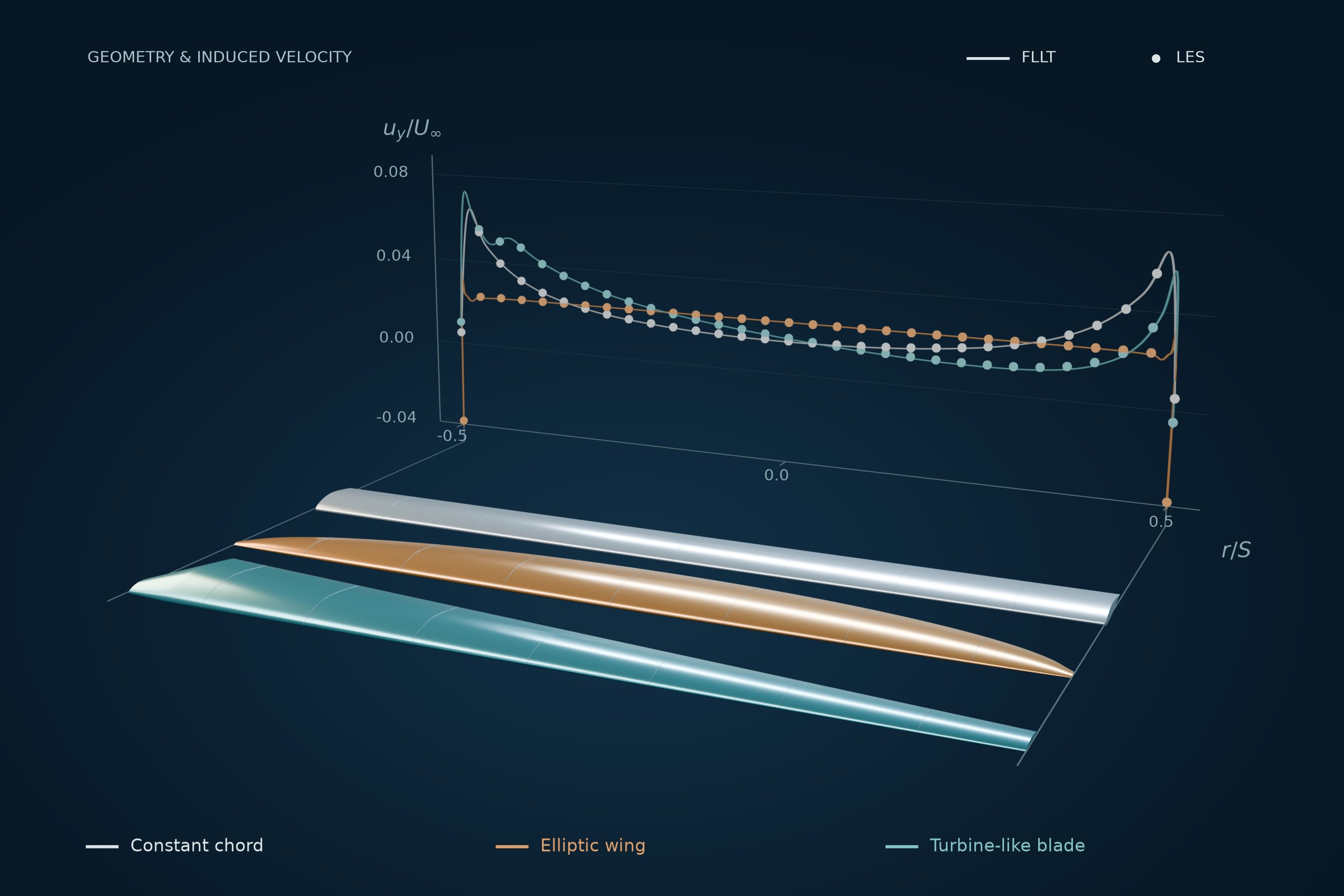
A framework that improves the accuracy of the actuator line model on coarser grids. FLLT corrections can reduce aerodynamic load prediction errors to a few percent while cutting computational cost by orders of magnitude.
Propeller aerodynamics
I study the aerodynamics of propellers and the interactions between rotors and their wakes in multirotor drones.
Selected publications
2015 · Wind Energy
Large eddy simulations of the flow past wind turbines: actuator line and disk modeling
2017 · Wind Energy
2019 · Journal of Fluid Mechanics
Filtered lifting line theory and application to the actuator line model
2019 · Wind Energy Science
The aerodynamics of the curled wake: a simplified model in view of flow control
2022 · Wind Energy Science
FLOW Estimation and Rose Superposition (FLOWERS): an integral approach to engineering wake models
2025 · Journal of Fluid Mechanics
Unsteady aerodynamic loads on pitching aerofoils represented by Gaussian body force distributions
Luis “Tony” Martinez Tossas · PhD, PE
The curled wake model
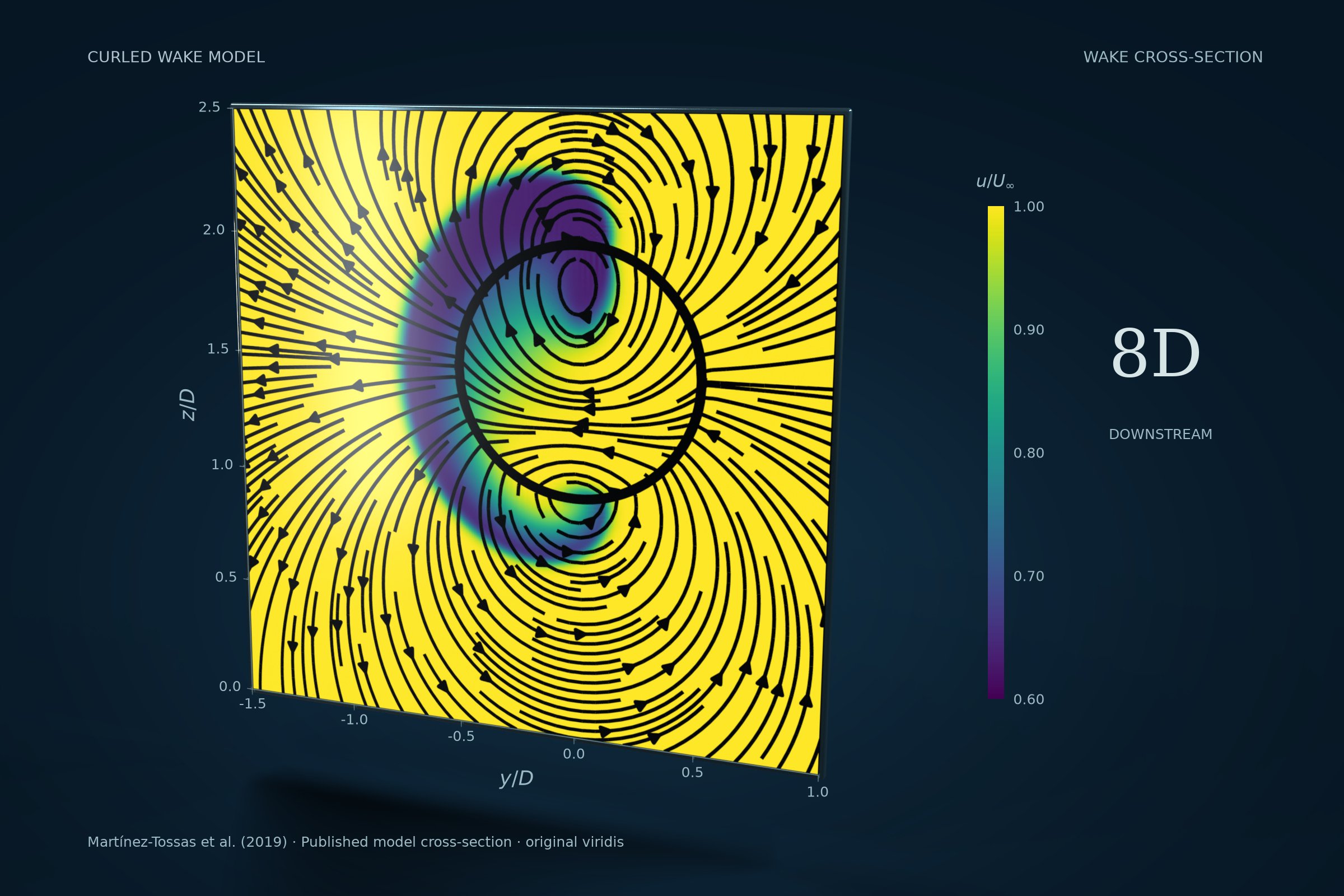
A controls-oriented model that captures how yawing a wind turbine redirects and deforms its wake. It brings these aerodynamic effects into models used for wake steering and wind-farm control.
Negative Tip Vortex Blade
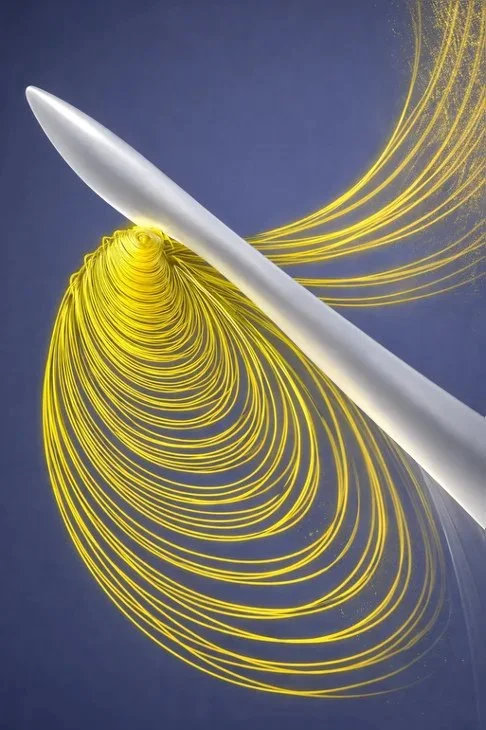
Patented blade-tip technology developed at NLR and now being commercialized through Novo Blades. I am an inventor of the technology and CTO of the company.
US 12,066,002 · 2024
A MODELING EXAMPLE
Modeling an airfoil.
An airfoil example shows how the width and location of a Gaussian force change the predicted flow relative to a potential-flow reference.